
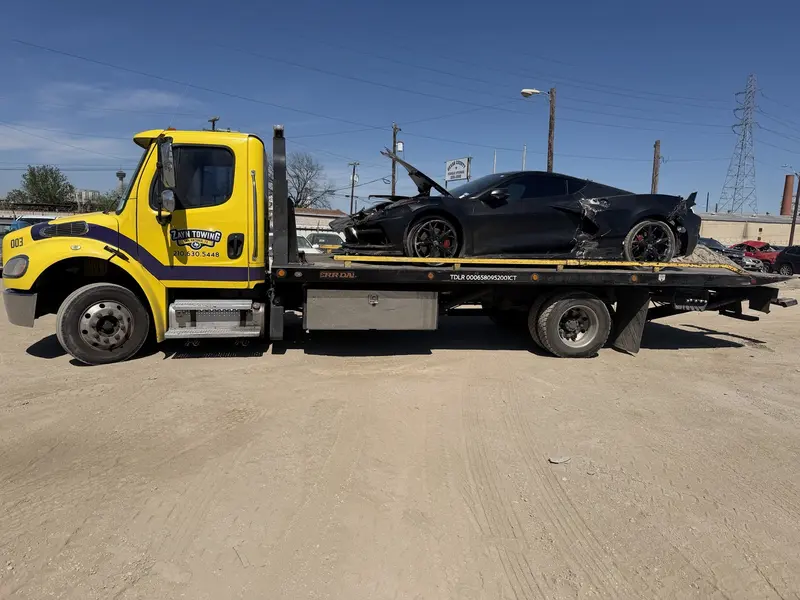
Safety and official direction come first
Do not enter moving traffic or approach leaking fuel, smoke, fire, or unstable vehicles. Follow law-enforcement and emergency-personnel instructions. A towing company does not replace police, fire, medical, or insurance guidance.
What dispatch may need
- Exact scene location and direction of travel
- Whether police or emergency services are present
- Vehicle year, make, model, and color
- Visible body, wheel, suspension, or glass damage
- Whether the vehicle is upright and accessible
- Whether keys are available
- Requested repair shop, storage destination, home, or other approved location
Collision damage can affect recovery
Wheels may be locked, suspension components may be displaced, glass may be broken, or loose parts may be present. Describe what you can see from a safe location without moving damaged components.
Document and remove essentials when permitted
If authorities say it is safe, photograph the vehicle and remove medication, identification, work items, child seats, garage remotes, and other essentials. Do not delay scene clearance or enter an unsafe area.
Confirm the destination
Tell dispatch where the vehicle should go and who can receive it. Insurance involvement does not automatically confirm a tow destination or price; clarify the plan before service begins.